
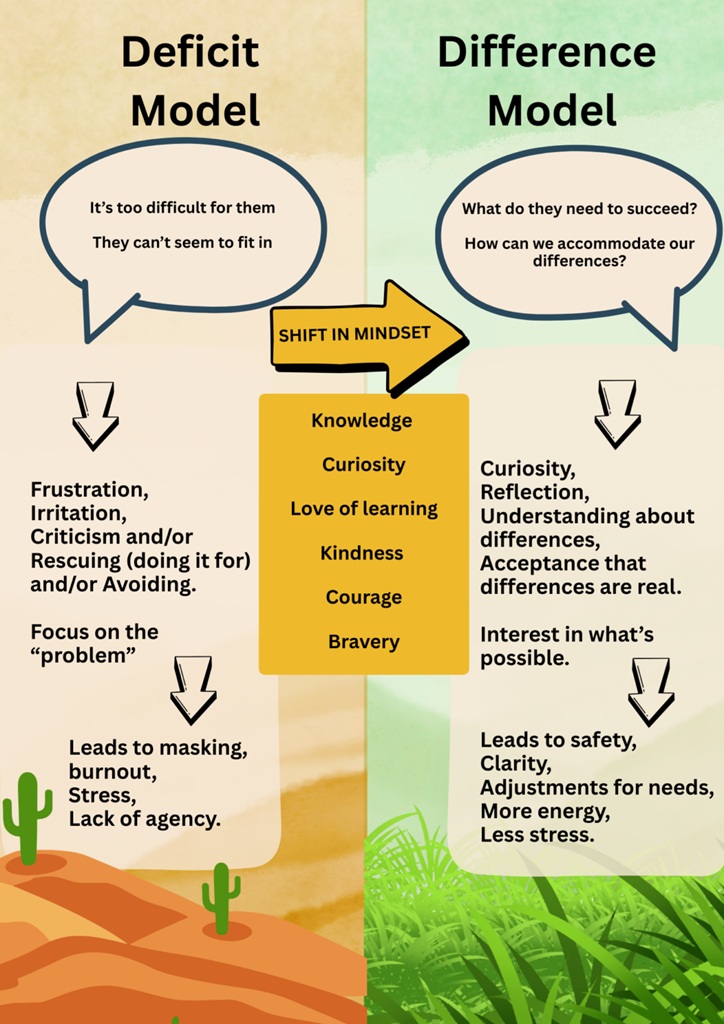
A lot of the language around neurodiversity is rooted in deficit.
Words and prefixes like disorder, deficit, hyper, dys all point to a deviation from a perceived “norm”. And language matters. It quietly shapes how we think, feel, and respond, often without us even noticing.
So it’s worth pausing to reflect:
What impact has this language had on how we see neurodivergent people?
Have we unconsciously absorbed the belief that being neurodivergent means being somehow less?
Do we default to assuming a lack of ability?
The hidden impact of a deficit model lens
When we view neurodivergence through a deficit model lens, it subtly influences our behaviour.
We might focus on what’s difficult and overlook strengths.
Lower expectations
Step in and take over rather than empower
Offer help in ways that remove autonomy
Feel frustrated, irritated, and critical
Over time, these responses can have unintended consequences.
For the neurodivergent person, it can lead to masking, avoidance, burnout, or even giving up altogether.
And this isn’t limited to one context, it can show up:
At home, as a parent of a neurodivergent child
At work, as a manager of a neurodivergent colleague
Within teams, trying to collaborate and perform
A different way of seeing
What if there’s another lens we can use? A difference model invites a shift in perspective.
Instead of asking:
“What’s wrong with them?”
We begin asking:
What do they need to succeed?
How are we different?
How can we accommodate our differences?
This shift might seem small, but its impact is significant.
What changes when we adopt a difference model lens?
When we start to see neurodivergence as a difference in how people process, perceive, and communicate, several things begin to change:
Curiosity replaces frustration
We start learning about differences and accept that other people are experiencing the world differently to us.
We begin to get interested in what’s possible when we accept that these differences exist.
We also start asking better, more useful questions:
What helps you work at your best?
What do you need to thrive?
How can I create more clarity or certainty for you?
Why this matters
This shift isn’t just about language, it’s about outcomes.
When we move from a deficit model lens to a difference model lens:
Individuals are more likely to feel understood
People feel safer
We can start to meet needs
Teams function more effectively
Families experience less tension and more connection
We create environments where people don’t have to mask who they are to succeed.
Some final thoughts…
Where might you be viewing neurodivergence through a deficit model lens?
What might change if you chose to see it through a lens of difference instead?
Because when we change the way we see…
we change what becomes possible.
If you missed Part 1, you can read it here

